


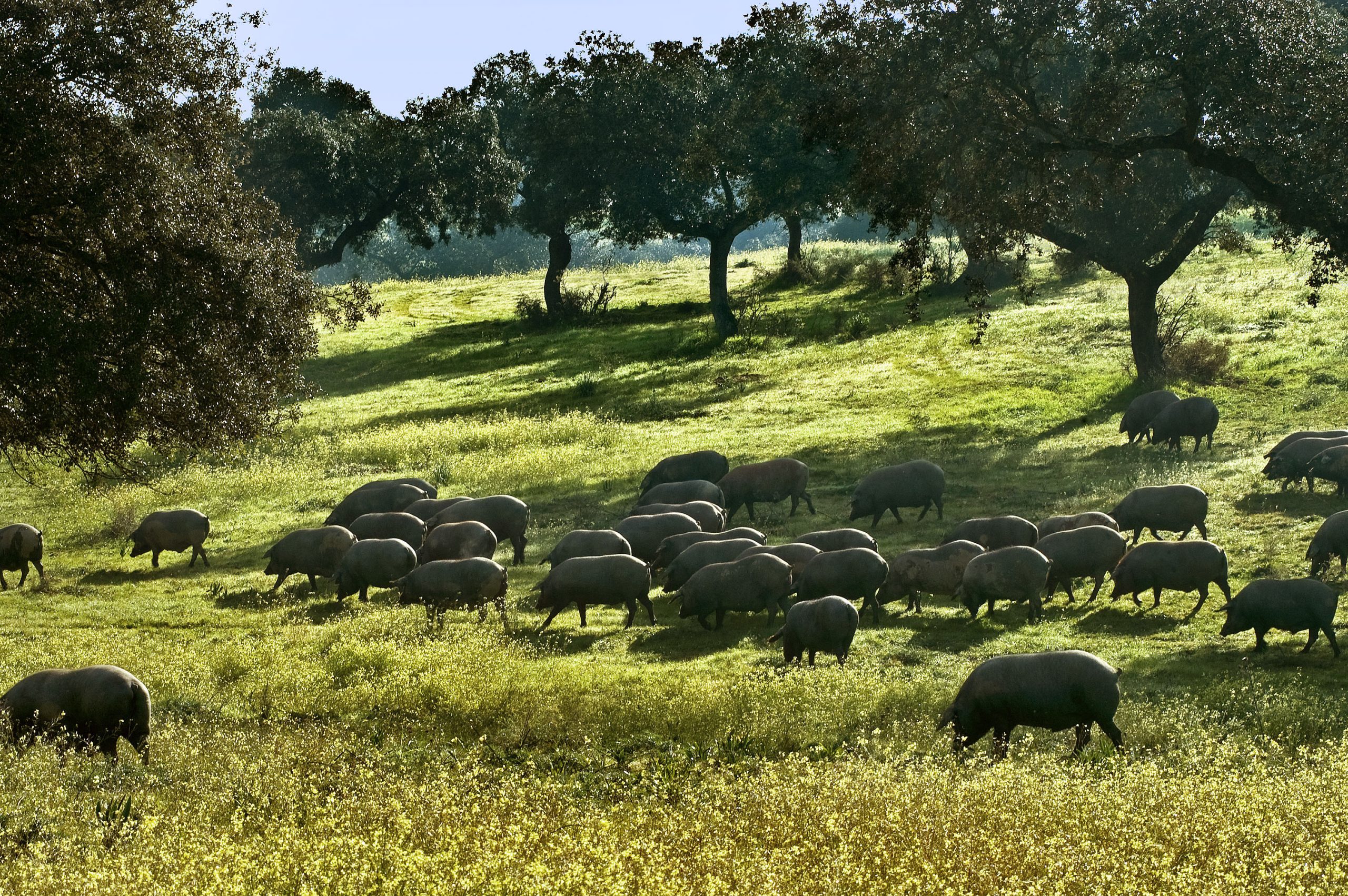
During the autumn and winter months, the montanera marks the most important period in the rearing of the Iberian pig. In the dehesas of Extremadura, the animals feed naturally on acorns, grasses, and roots, roaming extensive areas that allow them to develop balanced musculature and fat infiltration, which ensures the characteristic flavor and juiciness of acorn-fed Iberian products. This process, which generally takes place from October to February, is essential for the final products to achieve the standards of excellence recognized both nationally and internationally.
The Protected Designation of Origin (PDO) Dehesa de Extremadura supervises every stage of the montanera to ensure the quality and authenticity of Iberian pigs. From verifying the breed and purity of the animals to certifying that the dehesas meet the proper requirements for land and feeding, the PDO guarantees that only pigs meeting all the criteria receive the acorn-fed Iberian certification.
During this period, PDO technicians carry out regular inspections to monitor animal welfare, pig density per hectare, proper feeding, and the traceability of each animal. Data such as the pigs’ weight at the beginning and end of the montanera are recorded, ensuring that fattening is carried out in accordance with regulations while maintaining the excellence of the final product.
In addition, the PDO Dehesa de Extremadura certifies and endorses products derived from the Iberian pig, guaranteeing consumers the authenticity and quality of hams, shoulders, and loins. Its work protects not only the product but also the sustainability of the dehesas and the conservation of a unique ecosystem, combining tradition, animal welfare, and respect for the natural environment.


